The 2026 Pickle Season…Jim Pelis discusses
Hi Folks!
If you’re up here in the Boston area like me; how about that Labor Day Weekend weather! Dope AF!
The growing season is approaching end of life. This Summer we grew 100% of the cucumbers and dill used in Jimmy’s Pickles in our raised beds. The garlic and onions were purchased locally from the Newton Farmers Market or local farm stands like Land Sake. We spent the Summer focused on perfecting the process of making the pickles. This included the packing process which is always manual and done in our kitchen. We found that using 16oz Ball jars are the ideal size for the product. We debated using plastic containers but were encouraged by almost all of our friends to stick to glass. (we will have a survey out soon to get public opinion on glass vs plastic) Our raised beds were producing enough pickles for about 2-3 jars a week. We also pre-made brine and kept in the refrigerator so when enough cucumbers were on the vine we could quickly start the pickle transformation process. We planted the cucumbers in tomato cages this year and trained the cucumber plants to climb up the cages. This prevented the vines from sprawling out on the ground and made for easy harvesting. The Summer was spent in full recipe and process test mode. We are now prepared to apply what we learned to larger scale production process. My next post will be about are plans to take Jimmy’s Pickles to market.
-Jimmy
Picking Cucumbers…Jim Pelis discusses
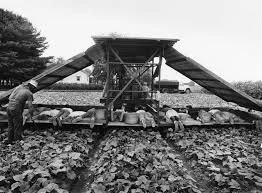
If you ask most people where pickles come from they typically say the super market. But pickles start in the field. Back in the early 1980s multiple acres were grown in Western MA. Towns like Hatfield, Hadley, Whatley and Northampton had large expanses of farm land along the banks of the Connecticut River. Better known as the Pioneer Valley. Due to floods during the 30s and 40s the farm land in these town was extremely fertile and largely considered some the best growing conditions in the United States. The majority crop grown at that time was either shade tobacco(used for cigar wrappers) or field tobacco(ground up and used for filler). The 3rd largest crop after potatoes were cucumbers. Cucumber picking was typically a first job a local teenager would get during the Summer. My brother and I got our first picking jobs when were 13 and 14. The process of picking was done on a converted truck chassis with a perpendicular deck accross it. This is where a worker would lie flat on their stomach as the picker slowly crawled down each row. You would reach down and pick the cucumbers are the picker moved forward. Throwing each one into a pale or conveyor in front of you. The conveyor filled a hopper on the picker. This was a grueling job. First your face is literally 6 inches from the dirt all day. In a dusty cucumber field. Cucumber leaves and vines are rough so you had to wear a long sleeve shirt to avoid cuts. Not to mention the cucumber itself has tiny spines on it. Some people wore gloves but as the Summer wore on your hands would be calloused enough to dull the pain. Our crew was a combination of teens from Hatfield and Northampton. The Northampton crew would different. But they brought the boom box which we listened to all day. Lighting up big bowls of home grown and blasting tapes of Led Zeppelin, AC/DC and Skynyrd. This was where you realized what real farm work entailed. My next post will be about where the cucumbers went after being picked.